A Roman emperor's private journal — written to himself, never meant to be published. Just a man wrestling with his own ego, his temper, his power, and his mortality. That's why it's still here 1,800 years later. It reads less like philosophy and more like an honest conversation with yourself in the dark.
"You have power over your mind, not outside events. Realize this, and you will find strength." The Stoics didn't teach detachment. They taught presence — fully engaged, not controlled by outcomes.
Dave's take: I've read this every year for a long time. Every year it hits different. If you read one book from the ancient tradition, make it this one. Start with Book II. Read slowly. Read with a pen.

James Clear makes the science of behavior change as clear as the title suggests. The core insight: you don't rise to your goals — you fall to your systems. And tiny changes, compounded daily, produce results that look miraculous from the outside.
Every action is a vote for the person you want to become. Identity precedes behavior. Don't ask "what do I want to achieve?" Ask "who do I want to be?"
Dave's take: I've read a lot of habit books. This is the best modern treatment of the subject. And when you put it next to Marcus Aurelius? The ancient and modern frameworks match almost perfectly. The monks called it ascesis. James Clear calls it a system. Same thing.
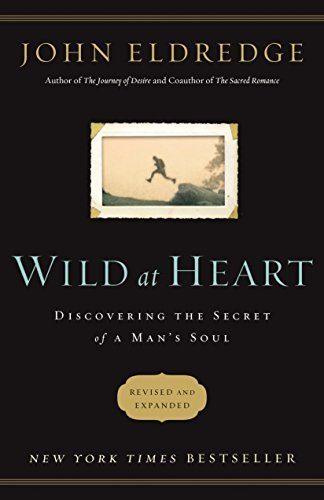
Eldredge makes the argument that something essential has been domesticated out of men — and that God designed men for adventure, battle, and beauty, not just safety and management. He names things most men feel but rarely say out loud.
The deep question every man carries isn't "am I capable?" It's "do I have what it takes?" And the wound that shapes so much of a man's life is usually the answer he got to that question early on.
Dave's take: I read this at a turning point and it named things I couldn't name myself. This isn't a self-help book. It's a soul book. For the men who think they've got it together but feel something is missing — start here.
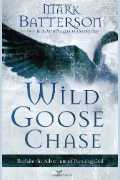
Based on the Celtic Christian concept of the Holy Spirit as a "Wild Goose" — untameable, unpredictable, leading you somewhere you wouldn't have chosen for yourself. Batterson challenges readers to stop domesticating their faith and start chasing the callings that scare them.
A safe life and a significant life are not the same thing. Write down your goals — especially the ones that seem impossible — and then go.
Dave's take: This is the book that started my goal list. Which means it's indirectly responsible for 48 states on a Harley, a marathon, and a lot of other adventures I wouldn't have had without that page of goals. Read it. Then write your list.
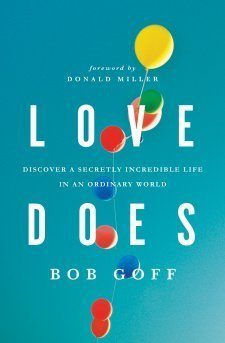
Bob Goff writes the way he lives — recklessly generous, story-shaped, and completely unreasonable in the best way. This is a book about what love looks like when it stops being a feeling and becomes a direction — toward people, not away from them.
Love is not a sentiment. It's not even primarily a feeling. It's a decision about where you're going to point your life.
Dave's take: Bob is who I want to be when I grow up. Every story in this book ends with someone being surprised by kindness. That's the point. You can live that way too. Highly recommend if you need to be reminded that joy is a valid spiritual practice.

In a culture addicted to speed, Comer makes the case that hurry is the enemy of the life we actually want — and that the spiritual practices of Jesus weren't accessories to a busy life but the actual shape of a different kind of life. Drawing on Dallas Willard's foundational insight: "Hurry is the great enemy of spiritual life."
You cannot run the life of Jesus at the speed of the modern world. Sabbath, solitude, silence, simplicity — these aren't quaint old practices. They're survival tools for people who want to remain human.
Dave's take: This one convicted me — and I am a person who moves fast. The Desert Fathers had a word for the restlessness Comer describes: acedia. The cure then is the same as it is now: slow down, pay attention, stay where you are.

A 17th-century lay brother in a monastery writes about what he learned washing dishes for 15 years. Turns out you can practice the presence of God anywhere — not just in chapel, not just in the quiet moments, but in the noise, the mundane, the ordinary middle of an ordinary day.
The sacred isn't separate from the ordinary. It's hidden inside it. The discipline isn't getting away from your life — it's learning to see God in the middle of it.
Dave's take: Short book. Life-changing idea. I think about Brother Lawrence every time I'm doing something that feels unspiritual. Serving at the shelter. Lifting weights. Riding the Harley. He'd say that's exactly where the practice is.

A psychiatrist survives the Nazi death camps and comes out with a theory of what keeps people alive — not hope, not strength, but meaning. The person who knows the why of their existence can endure almost any how. One of the most important books ever written.
Suffering is not optional. Meaning is. The last of the human freedoms is the freedom to choose your attitude toward whatever you cannot change.
Dave's take: I work with people who have been through things that would level most of us. Trauma, loss, addiction, homelessness. This book is part of my foundation for that work. It belongs in every serious thinker's library — and every counselor's as well.

One of the most important books written on trauma in the past thirty years. Van der Kolk shows — with decades of research — that trauma is not just a story we tell about our past. It is a physical reality stored in the body, the nervous system, and the brain's threat-detection circuits. Healing requires more than understanding. It requires the body.
Talk therapy alone is often not enough. The body holds what the mind cannot yet process — and healing means learning to work with both.
Dave's take: This is the scientific backbone behind The Forge. Every session in the curriculum is informed by what van der Kolk's research reveals about how trauma lives in the body and how it heals. Read it slowly. Highlight everything. It will change how you see almost everyone you work with.

Holiday draws from the Stoics, Buddhist teachers, and contemplative Christians to make one compelling argument: the most effective thing you can do — for your leadership, your creativity, your relationships — is learn to be still. Not as escape, but as the foundation everything else is built on.
Stillness is not the absence of activity. It's a quality of presence. The people who changed the world — Marcus Aurelius, Lincoln, Churchill, Tiger Woods — all had a practice of inner quiet underneath their outer intensity.
Dave's take: Ryan Holiday does for the Stoics what a good translator does for a foreign text — makes them speak in plain English about real life. This one bridges perfectly to the Desert Fathers and to what John Mark Comer calls the ruthless elimination of hurry. They're all saying the same thing.
Nouwen draws directly from the Desert Fathers to make the case for three essential spiritual disciplines: solitude, silence, and prayer. Short enough to read in an afternoon. Dense enough to spend a year practicing. One of the great introductions to the contemplative tradition for people who live in the noise of modern life.
Solitude is not loneliness. It is the place where Christ remolds us in his own image — away from the compulsive urge to be relevant, spectacular, or powerful.
Dave's take: I've given this book away more times than I can count. If you've ever wanted to understand what the Desert Fathers actually practiced — and why it still matters — this is your on-ramp. Nouwen writes theology that breathes, which is rare and necessary.

Willard makes the most rigorous and compelling case I've read for why spiritual disciplines are not optional extras for serious Christians — they are the very means by which genuine transformation of character becomes possible. Anchored in both Scripture and philosophy, it is dense, demanding, and worth every page.
Grace is not opposed to effort. It is opposed to earning. The disciplines are not how we earn God's favor — they are how we train for the kind of person who naturally does what Jesus would do.
Dave's take: Willard is the anchor for all of it. If you want to understand why ancient practices like fasting, solitude, and lectio divina actually work — not just spiritually but neurologically and behaviorally — this is your foundation. Read it alongside Atomic Habits and watch both books become more useful.
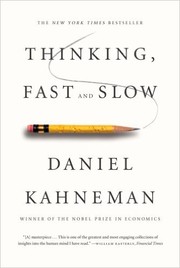
A Nobel laureate maps the two systems running your brain: System 1 (fast, instinctive, emotional) and System 2 (slow, deliberate, logical). The problem is System 2 is lazy — and System 1 makes most of your decisions while pretending otherwise.
"We are prone to overestimate how much we understand about the world and to underestimate the role of chance in events." You are not as rational as you think. Neither am I. Neither is anyone. The question isn't whether you have cognitive biases — it's whether you know which ones are running your life.
Dave's take: I assigned this book to every principal I ever supervised. Not because it's easy — it isn't — but because it's honest. If you want to understand why smart people make consistently bad decisions under pressure, this is the book. Dense but worth it. Start with chapters 11 and 12 if you need a reason to keep going.

Fixed mindset vs. growth mindset. The research behind why some people see challenges as threats and others see them as invitations. Why talent is not the variable — effort is.
"Becoming is better than being." The fixed mindset says I either have it or I don't. The growth mindset says I don't have it yet. That one word changes everything about how a person approaches difficulty, failure, and long-term growth.
Dave's take: I've seen this play out in thirty years of schools. The kid who thinks he's 'not a math person' and the kid who thinks she 'just hasn't figured it out yet' are not the same kid five years later. Read this if you work with people. Read it if you are a person. The chapter on sports is particularly good.

Goggins went from 300-pound exterminator to Navy SEAL to one of the most decorated ultramarathon runners alive — through nothing but savage self-discipline. Part memoir, part uncomfortable mirror.
The 40% rule: when your mind says stop, you're only at 40% of your actual capacity. Your mind will quit long before your body does. Most people live their entire lives inside that first 40%.
Dave's take: Read it. Do the hard things. Build the calluses. But ask the question Goggins never fully answers: What is all this in service of? Discipline without direction is just pain management. He builds a bulletproof body and mind — what you build it for is on you.

The Tarahumara people of Mexico's Copper Canyons run hundreds of miles for fun, in sandals, well into old age. A journalist tries to figure out why modern Americans can't run a mile without injury. The answer is surprising.
We were made to move. The human body is not a machine that wears out — it's a system that thrives under use and atrophies under ease. Running injuries are largely a modern invention, created by modern solutions.
Dave's take: I was in the middle of marathon training when I read this. It changed how I run and how I think about aging. You don't slow down because you get old. You get old because you slow down. One of the most fun books on this list — it reads like a thriller.
You can be spiritually active and emotionally immature at the same time. Scazzero's thesis: the church has consistently failed to help people grow emotionally, and it's stunting their spiritual development.
"Emotional health and spiritual maturity are inseparable. It is not possible to be spiritually mature while remaining emotionally immature." You can pray for years and still have the emotional intelligence of a teenager. The two tracks have to run together.
Dave's take: This one hit me between the eyes. I'd seen it my whole life — deeply spiritual people who couldn't handle a hard conversation without falling apart or shutting down. Scazzero names it with precision and offers a path forward. If you work in ministry or lead people in any capacity, this is required reading.

People give and receive love in five different languages: Words of Affirmation, Acts of Service, Receiving Gifts, Quality Time, and Physical Touch. When couples speak different languages, they feel unloved even when love is being given generously.
You're probably loving your spouse in the language you want to receive — not the one they need to hear. Learn their language. Speak it fluently. Repeat for the rest of your life.
Dave's take: I wish someone had handed me this book in year one of our marriage. Forty-two years in, it still applies. My wife and I have had to re-learn each other's languages at different seasons of life — new pressures, new needs, same commitment. Deceptively simple. Genuinely powerful.

Why you struggle to say no. Why you feel responsible for everyone else's emotions. Why you're exhausted. And how to change it — grounded in both solid psychology and Scripture.
"Boundaries are not walls. They are property lines." They don't keep people out — they tell people where you end and they begin. Healthy love requires healthy limits. You cannot give from empty.
Dave's take: I've recommended this more than almost anything else on this list. I've watched it save marriages, restore friendships, and give people permission to stop carrying what was never theirs to carry. The chapter on church boundaries alone is worth it. Read it with a highlighter.

What separates truly great organizations from merely good ones? Collins and his team studied 28 companies over five years. The answer is counterintuitive, research-backed, and directly applicable beyond business.
Level 5 Leadership is a paradox: fierce professional will combined with personal humility. The best leaders don't have the biggest personalities. They have the deepest convictions — and they get the ego out of the way.
Dave's take: I used the Hedgehog Concept in every leadership development program I ever ran. The three-circle framework — what you're deeply passionate about, what you can be best at, what drives your engine — is one of the most clarifying questions you can ask. It doesn't just apply to organizations. It applies to you.

Why do some teams pull together under pressure and others fracture? Sinek traces the biology of trust, safety, and sacrifice — from the Marine Corps to the boardroom — and finds that great leaders build a Circle of Safety first.
"The leaders who eat last build cultures where people feel safe enough to do their best work." Safety is not softness. It is the precondition for everything else. Without it, you don't have a team. You have a collection of individuals protecting themselves.
Dave's take: The Marine tradition of officers eating last isn't just a custom — it's a signal. I saw this play out in every great team I ever worked with. The leader absorbs cost so the team doesn't have to. Read this alongside Good to Great and you'll have a complete framework for leading people.

Seven baby steps to debt-free living, built on the radical premise that you should spend less than you make. Simple, proven, and requiring something most financial books skip: behavioral change.
"Personal finance is 80% behavior and 20% knowledge." You don't need more information. You need a plan you'll actually follow — and the discipline to follow it when it's inconvenient, which is always.
Dave's take: I have mixed feelings about Ramsey's style — he can be heavy-handed. But the plan works. I've watched it work in the lives of people who started with nothing and built something real. If you're carrying debt, don't argue with the methodology. Just do the work. Results first, opinions later.

Holiday distills the Stoic framework for adversity into a single, repeatable principle: the obstacle in front of you is not in the way of the path — it is the path. Drawing from Marcus Aurelius, Epictetus, and Seneca, and illustrating with stories from Lincoln, Roosevelt, and Churchill, this is the most practically useful translation of Stoic thought written in the modern era.
"The impediment to action advances action. What stands in the way becomes the way." Whatever is blocking you right now isn't a detour. It's the curriculum. The Stoics didn't avoid hard things — they sought them. The resistance is where the formation happens.
Dave's take: If you've read Meditations and wanted a modern translator, Holiday is your guy. This is the book I recommend most to men in hard seasons — career setbacks, broken relationships, health challenges. It doesn't offer comfort. It offers a framework. That's better. Read it when things are hard, not when things are easy.

Brown's research into shame and vulnerability produced one of the most important cultural conversations of the past two decades. The core finding: vulnerability is not weakness. It is the birthplace of courage, creativity, and connection. And the armor we build to avoid feeling it is costing us everything we say we want.
"Vulnerability is not winning or losing; it's having the courage to show up and be seen when we have no control over the outcome." Most men were taught the opposite — that control is strength and exposure is danger. Brown's research says that's exactly backwards.
Dave's take: This book is harder for men than it looks. I've given it to dozens of guys and watched them bristle at the word "vulnerability" — and then find their marriages and leadership transformed within a year. The chapter on shame resilience alone is worth three therapy sessions. Don't skip it because it sounds soft. It isn't.
The autobiography of Corrie ten Boom, who helped hide Jewish families from the Nazis during WWII and survived Ravensbrück concentration camp. Not a book about survival strategies or resilience frameworks. A book about what it looks like to hold faith under conditions that should have destroyed it — and the grace that somehow held.
"There is no pit so deep that He is not deeper still." Ten Boom wrote those words after watching her sister die in a Nazi camp and after being released herself by a clerical error. She didn't arrive at that sentence from a comfortable chair. That's the only reason it means anything.
Dave's take: If Viktor Frankl is the secular version of finding meaning in suffering, Corrie ten Boom is the sacred version. I've read both multiple times and together they form something complete. This is a book about what faith costs — and what it produces. I don't recommend it lightly. But I recommend it strongly.

The definitive guide to having high-stakes conversations well. A crucial conversation is one where the stakes are high, opinions differ, and emotions run strong — which is exactly when most people either go silent or go into attack mode. This book teaches a third way.
The moment a conversation becomes crucial, we tend to avoid it or bulldoze through it. Both responses produce the same outcome: damaged relationships and unresolved conflict. The way out is to create psychological safety first — then the truth can actually enter the room.
Dave's take: I used this book in every leadership development cohort I ran for twenty years. The skill of separating facts from stories — what happened versus the narrative you built around it — is one of the most important communication tools I know. Read it, then actually practice the frameworks. It takes repetition. It's worth it.

A research-backed portrait of how most wealthy Americans actually live: not in penthouses, not driving luxury cars, not spending lavishly. They live below their means, invest consistently, work hard at unglamorous jobs, and avoid looking rich. The findings challenge almost everything popular culture says about wealth.
"Wealth is what you accumulate, not what you spend." The people who look wealthy and the people who are wealthy are mostly different groups. High-income earners who live large usually have far less net worth than lower-income neighbors who never bothered to impress anyone.
Dave's take: This book dismantled more financial mythology for me than anything else in the genre. It's the empirical case for the ancient principle of enough — live simply, give generously, build patiently. The Stoics would have recognized every person in this book. Read it before you upgrade your lifestyle.

McKeown's thesis is deceptively simple: almost everything is nonessential, and almost no one has the discipline to act like it. The essentialist doesn't ask "how do I fit everything in?" — they ask "what is the single most important thing, and how do I protect the space to do it well?"
"If you don't prioritize your life, someone else will." The busy person and the productive person often look identical from the outside. The difference is that the productive person made a deliberate choice about what matters — and the busy person said yes to everyone else's version of that.
Dave's take: I spent most of my leadership career saying yes to everything because I thought that was the job. This book helped me see that unfocused contribution is often just noise with better intentions. The chapter on the 90 percent rule — if it's not a clear yes, it's a no — changed how I make decisions. Still using it.

The bestselling nonfiction hardcover in American history makes a simple argument: your life is not an accident, you were made on purpose and for a purpose, and meaning is found not in what you accumulate but in what you contribute. Forty days of short chapters designed to be read slowly.
"The purpose of your life is far greater than your own personal fulfillment, your peace of mind, or even your happiness." Warren doesn't pull punches. You exist to bring glory to God and serve others. That's the whole argument. Agree or not — it's clarifying.
Dave's take: Over thirty million copies. There's a reason. It isn't a literary masterpiece, but it's not trying to be one. It's trying to get ordinary people to stop asking "what do I want?" and start asking "what was I made for?" That's a better question. Read it with a group if you can — the conversation is worth as much as the book.
A physician who spent decades on the cutting edge of longevity science lays out a complete framework for what actually predicts healthy aging. His argument: modern medicine is excellent at treating illness once it arrives and nearly useless at preventing it. The practices that extend healthy life are available to anyone willing to start early.
The four horsemen of chronic disease — heart disease, cancer, metabolic dysfunction, and neurodegeneration — are all preventable or delayable. The tools are unsexy: strength training, zone 2 cardio, sleep, glucose management, and emotional health. The time to start is not when you're sick. It's now.
Dave's take: I've been focused on physical health since my thirties, but this book reorganized everything I thought I knew. The chapters on strength training and VO2 max changed my workouts. The chapter on emotional health — which he admits took him decades to take seriously — is some of the most honest writing in the book. Read it at 40, not 60.
A Pulitzer-winning journalist investigates the science of habits — how they form, how they operate neurologically, and how they can be changed. The habit loop (cue → routine → reward) explains an enormous amount of human behavior that we usually attribute to willpower or character. It isn't character. It's circuitry.
You don't change a habit by eliminating it. You change it by replacing the routine while keeping the cue and reward the same. The brain doesn't distinguish good habits from bad ones — it just runs the loop. Keystone habits are particularly powerful: change one and it cascades into others.
Dave's take: Read this alongside Atomic Habits and The Spirit of the Disciplines and you'll have a complete theory of transformation from three angles. Duhigg's research on keystone habits explains why Paul tells the Colossians to put on love as the outermost garment — it changes the whole outfit. Fascinating book.
MacDonald makes the case that most leaders manage their public worlds well and neglect their private worlds almost completely — until the private world collapses and takes the public one with it. A framework for cultivating the inner life that makes outer work sustainable and trustworthy.
"Busyness is the enemy of spirituality." MacDonald distinguishes between people who are driven — pushed from behind by external demands and inner anxiety — and people who are called. Most high-achievers are driven. Very few know it. This book helps you see which one you are.
Dave's take: I've read this book four times at different seasons of leadership. Every time it diagnoses something different — or something the same that I forgot to fix. The chapter on the Sabbath principle, written for leaders who don't stop, is the most practically challenging thing in it. If you lead anything and move fast, slow down long enough to read this.
A practical guide to the ancient spiritual disciplines — solitude, Scripture, prayer, sabbath, confession, community — written for people who live fully in the noise of modern life and are trying to find a sustainable practice of formation within it.
Transformation is not achieved by willpower applied to behaviors. It happens when we create the conditions that allow God's presence to do the work we cannot do ourselves. The disciplines are those conditions.
Dave's take: Barton is one of the most practically useful writers on spiritual formation available. This book gave me a framework for my own rhythms that I still use. If you've tried spiritual disciplines and found them isolating or mechanical, start here — she makes them come alive.

Duckworth spent years studying what separates high achievers from everyone else, and her answer is not talent. It's grit — a combination of passion and perseverance applied to long-term goals. The research is rigorous, the writing is clear, and the implications are useful for anyone serious about sustained growth.
"Enthusiasm is common. Endurance is rare." Talent tells you where you start. Grit determines where you finish. The most important thing is not finding what you're good at — it's building the capacity to stay in it when it stops feeling rewarding.
Dave's take: I assign this to every leader I coach who thinks they've hit a ceiling. You haven't hit a ceiling. You've hit the place where the work stops feeling good and most people quit. Duckworth gives you the research and the framework for what comes next. Read it alongside the Stoics for the ancient confirmation.

An accessible introduction to the Enneagram — not as a personality party trick, but as a tool for understanding the motivations, fears, and patterns that drive your behavior below the level of conscious choice. The kind of self-knowledge this book enables is genuinely rare and genuinely useful.
Most of us go through life reacting to our patterns rather than seeing them. The Enneagram doesn't change who you are — it helps you stop being controlled by the parts of yourself you don't understand yet.
Dave's take: I was skeptical of personality systems until I encountered the Enneagram. This is the best introduction I've found. I'm a Three. Reading about it in this book was equal parts illuminating and uncomfortable — which is exactly the sign that something true is being said about you. Read it with your spouse. The conversations that follow are worth the book price ten times over.

A sustained argument for the power of radical focus. Keller's central question — "What's the one thing I can do such that by doing it, everything else becomes easier or unnecessary?" — is one of the most clarifying questions I've encountered in any business or productivity book.
Multitasking is a myth. Divided attention is diluted attention. The most productive periods of any person's life happen when they focus enormous energy on a very small number of things — and protect that focus against everything competing for it.
Dave's take: I spent most of my leadership career doing too many things adequately. This book helped me understand what it would mean to do fewer things excellently. The chapter on time blocking changed how I structure my mornings. Pair it with Essentialism for a complete philosophy of focused living.
Willard's most comprehensive treatment of spiritual formation — what it means to have every dimension of the human person (will, mind, body, emotions, social relations, soul) transformed into Christlikeness. Dense, demanding, and the most serious treatment of Christian formation I've encountered.
"The spirit is willing but the flesh is weak" — Jesus was diagnosing a training problem, not making a fatalistic statement. The disciples needed practice, not just intention. Transformation is training, not trying.
Dave's take: I read this at a significant turning point in my faith and it reorganized everything. Willard takes seriously what the church often treats as optional — the actual transformation of the whole person, not just the conversion moment. If The Spirit of the Disciplines gave me the framework, this book gave me the map. Read them together.

The book that introduced EI to mainstream culture and made the research-backed case that emotional competency — self-awareness, self-regulation, empathy, motivation, social skills — predicts success in life and work more reliably than IQ. Published in 1995, still essential.
IQ gets you hired. EQ gets you promoted. More than that: EQ determines the quality of your relationships, your leadership effectiveness, and your capacity for genuine flourishing. It can be developed at any age. That's the news worth sharing.
Dave's take: I used this book in every leadership development cohort I ran for two decades. The chapter on the emotional brain — how the amygdala can hijack rational thinking before you've had a chance to respond — is the most practically useful neuroscience I've ever been able to apply in a coaching session. Required reading if you lead people.

Easter's argument: modern comfort is making us soft in ways that go far deeper than physical. The elimination of discomfort from daily life has produced anxiety, disengagement, and a loss of the hardiness that humans evolved over millennia. The solution isn't suffering — it's deliberate, voluntary discomfort as a practice.
The things that make life easy in the short term — convenience, constant entertainment, climate control, unlimited food — are quietly eroding the capacities that make life meaningful in the long term. Resilience, like muscle, atrophies without use.
Dave's take: This book confirmed things I've believed for years and put research behind them. Cold weather. Hard hikes. Fasting. Silence. These aren't punishment — they're practices that reconnect you to something essential. Pair with Goggins for the motivation and Attia for the physiology.
Villodas takes the intersection of contemplative spirituality and multiethnic community seriously — arguing that genuine formation requires both the interior work of silence and the exterior work of crossing cultural divides. A rich, challenging, timely book.
A deeply formed life is not a polished life. It's a life that has been in the presence of God long enough to be actually changed — and that change shows up in how you treat people across lines of difference, power, and comfort.
Dave's take: This is the book I keep recommending to pastors and church leaders who feel stuck between their spiritual depth and their social impact — wondering why the two don't seem to connect. Villodas shows how they do. Beautifully written. Important work.
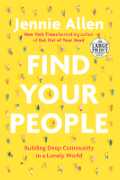
An honest, practical book about combating the epidemic of loneliness that is quietly destroying modern life — and building the kind of intentional, present, close community that research shows is one of the single greatest predictors of health and happiness.
Proximity is not community. You can be surrounded by people and profoundly alone. Community is forged in shared experience, genuine vulnerability, and the deliberate choice to stay through difficulty rather than drift at the first sign of friction.
Dave's take: The loneliness epidemic is real, and I see its effects in the coaching work I do every week. Allen writes about this with both urgency and practical wisdom. The chapter on what it actually takes to go from acquaintance to genuine friend changed how I think about my own investments in relationship.

A no-nonsense, surprisingly practical system for setting up your finances to run automatically — so you can spend without guilt on what you actually value while building wealth on the side. Not a budgeting book. A systems book for people who hate budgeting.
Automate the virtuous behaviors (saving, investing, giving) so you don't have to rely on daily willpower. The goal is not a perfect financial life — it's a good enough system you'll actually maintain for decades.
Dave's take: The title is off-putting and the tone is younger than my usual reading, but the substance is genuinely good. The automatic transfer system Sethi describes is exactly the kind of small-discipline-repeated-consistently principle that works across every domain of life. I recommend it to younger leaders constantly. Dave Ramsey for behavior change; Sethi for system design.

David's research-backed argument: the goal of emotional health is not to feel good — it's to be agile. To move through difficult emotions skillfully rather than getting hooked by them, suppressing them, or being controlled by them. A practical and genuinely helpful framework for anyone doing inner work.
"Rigidity — in our thoughts, emotions, and behaviors — is the biggest obstacle to living a full and fulfilling life." The emotionally agile person doesn't have fewer hard feelings — they have a different relationship to them. That relationship is trainable.
Dave's take: This is the most practical EI book I've read since Goleman's original. David's distinction between thoughts-as-fact and thoughts-as-information is one of the most useful reframes I've used in coaching conversations. Read it slowly. There's more here than a quick read captures.
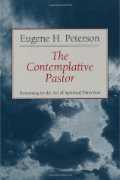
Peterson's sustained challenge to the managerial, programmatic, efficiency-obsessed model of pastoral ministry — and his argument that the pastor's primary calling is to pray, to be present, and to attend to the particular souls in their care rather than scale an organization.
"The pastor's primary work is not to be busy, but to be holy." A provocative claim in any institutional context. Peterson makes it compellingly and practically. His three adjectives for the Christian leader: unbusy, subversive, apocalyptic.
Dave's take: This isn't just for pastors. Anyone who leads people or serves a community will find the core challenge here deeply relevant: Are you managing processes or caring for people? Peterson forces you to examine which one you're actually doing. Short, dense, important. I've given this to more people than almost anything on this shelf.
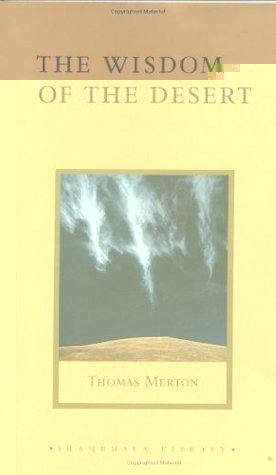
Merton's translation of the sayings of the fourth-century Desert Fathers and Mothers — brief, piercing, sometimes strange, and startlingly applicable to modern life. These are the people who left civilization to find God in the Egyptian desert, and their wisdom about attention, community, and the inner life is still sharp 1,700 years later.
"The more a man knows himself, the more he will flee from the company of men who do not know themselves." The Desert Fathers weren't fleeing the world — they were finding the one thing that could change it: a person wholly available to God.
Dave's take: Read this slowly — one saying a day, maybe two. These are not paragraphs to consume; they're seeds to plant. Merton's translation is accessible without being flat. I've been reading from this collection for years and still find things that stop me cold. Read it alongside The Way of the Heart (Nouwen) for the best possible introduction to the Desert tradition.
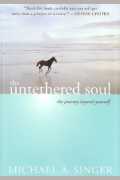
Singer explores what it means to free yourself from the relentless inner voice that narrates your life — the voice that judges, fears, and clings. Drawing on both Eastern contemplative traditions and Western psychology, the book argues that you are not your thoughts or emotions but the one who observes them. It's a genuinely liberating read for anyone who has ever felt trapped by their own mind.
"There is nothing more important to true growth than realizing you are not the voice of the mind — you are the one who hears it." The gap between the observer and the observed is where freedom actually lives.
Dave's take: I picked this up skeptically — the title sounds a little new-agey for my taste — and found myself underlining almost every page. Singer's framework maps remarkably well onto what the Desert Fathers called nepsis, watchfulness of the heart. If you've ever felt like your own inner life is working against you, this book gives you language and a framework to start doing something about it. Strong 5 stars.
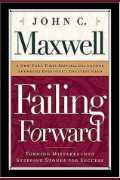
Maxwell makes a clear and practical case that the difference between people who achieve and people who plateau is not the absence of failure but the relationship they have with it. Failure, properly processed, is the primary curriculum of growth. The book is full of stories, practical frameworks, and a relentless insistence that your response to failure matters more than the failure itself.
"The difference between average people and achieving people is their perception of and response to failure." Failure isn't the end of the road — it's the road, if you're willing to keep walking.
Dave's take: Maxwell's books are easy to dismiss if you've read enough leadership literature — they can feel a bit formulaic. But this one earns its place on the shelf. I've used the core framework in coaching settings for years, particularly with leaders who are paralyzed by a past failure they can't seem to move past. Straightforward, practical, and honest about the real cost of playing it safe. 4 stars.

Psychiatrist Curt Thompson examines shame not as a feeling but as a formative force — one that shapes identity, disrupts relationships, and quietly undermines the life we're trying to build. Drawing on neuroscience, attachment theory, and Christian theology, Thompson argues that shame is the primary weapon against human flourishing and that it can only be healed in the context of honest community. This is one of the most important books on the inner life I've read in years.
"Shame is not just an emotion. It is a disintegrating force that fragments our sense of self and isolates us from the very relationships we need to heal." The path out of shame is not self-improvement — it is being known and still loved.
Dave's take: Thompson's book cracked something open for me that I'd been circling for decades. As someone who spent thirty years in education and ministry, I watched shame quietly destroy more people than any other single force I can name — including leaders who looked invincible from the outside. This book helped me understand the mechanism and, more importantly, what actually heals it. It's not a light read but it's a necessary one. 5 stars.